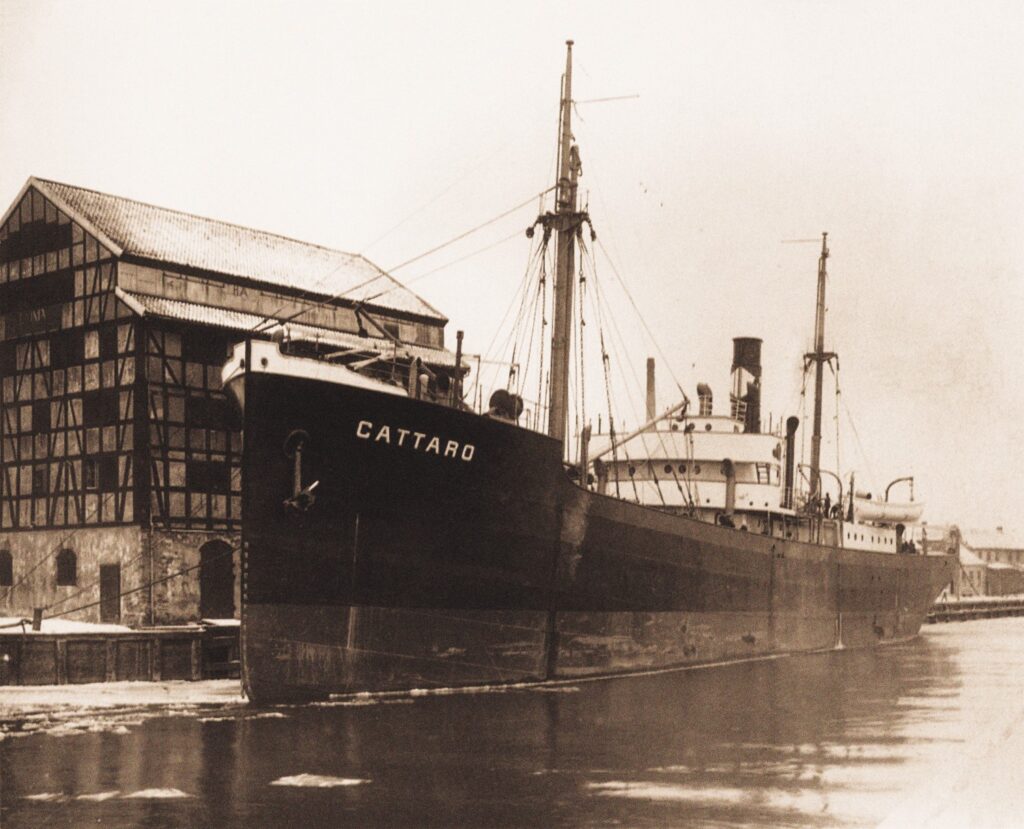
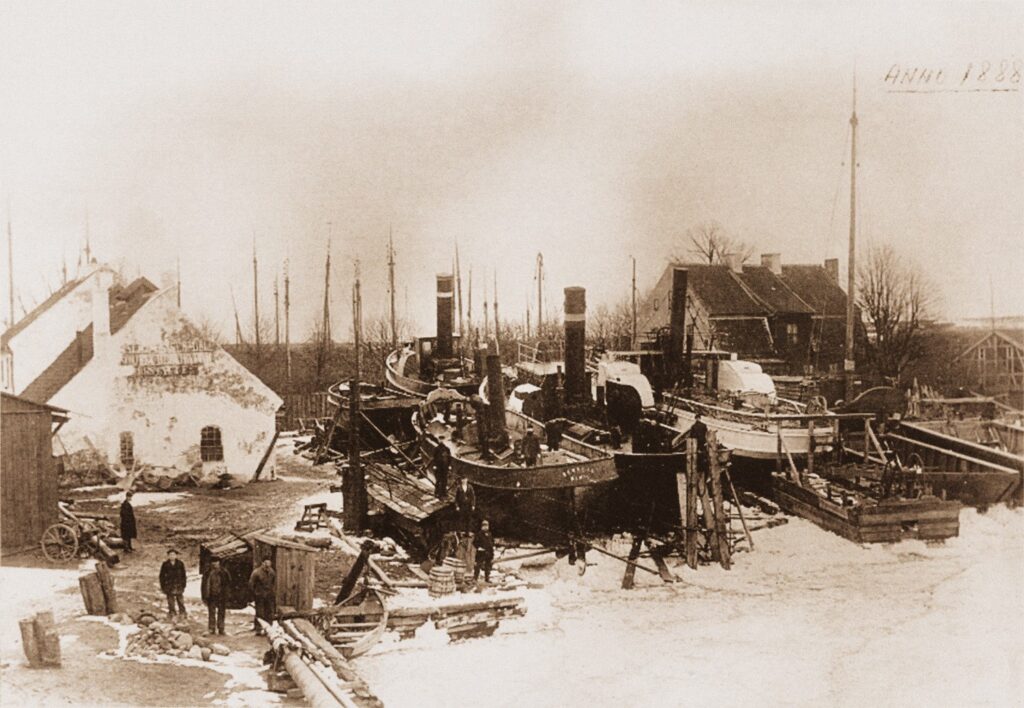
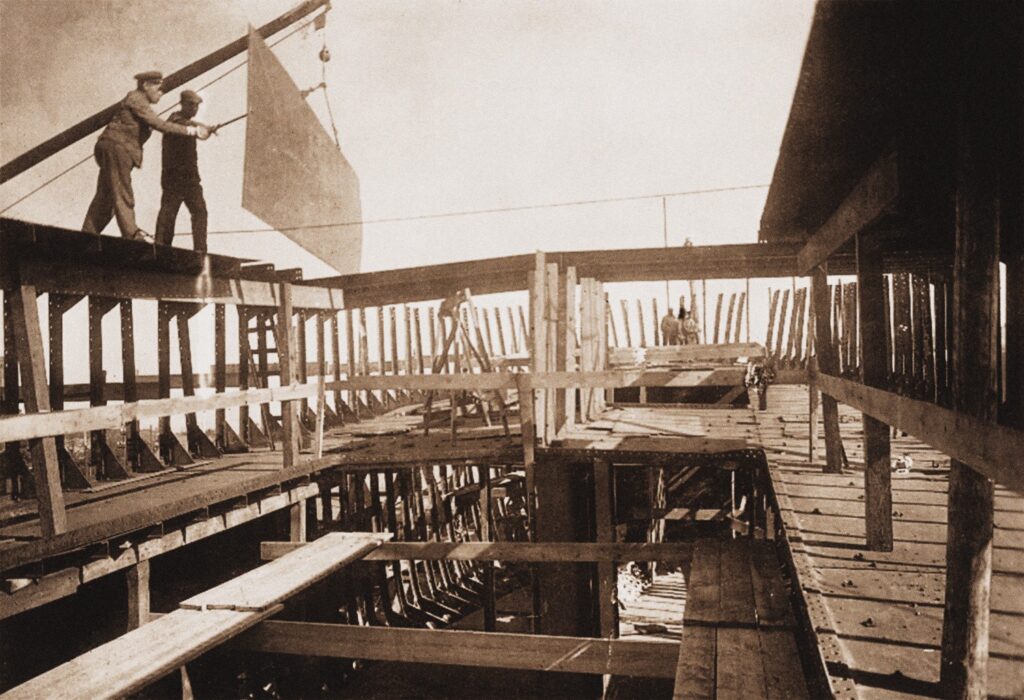
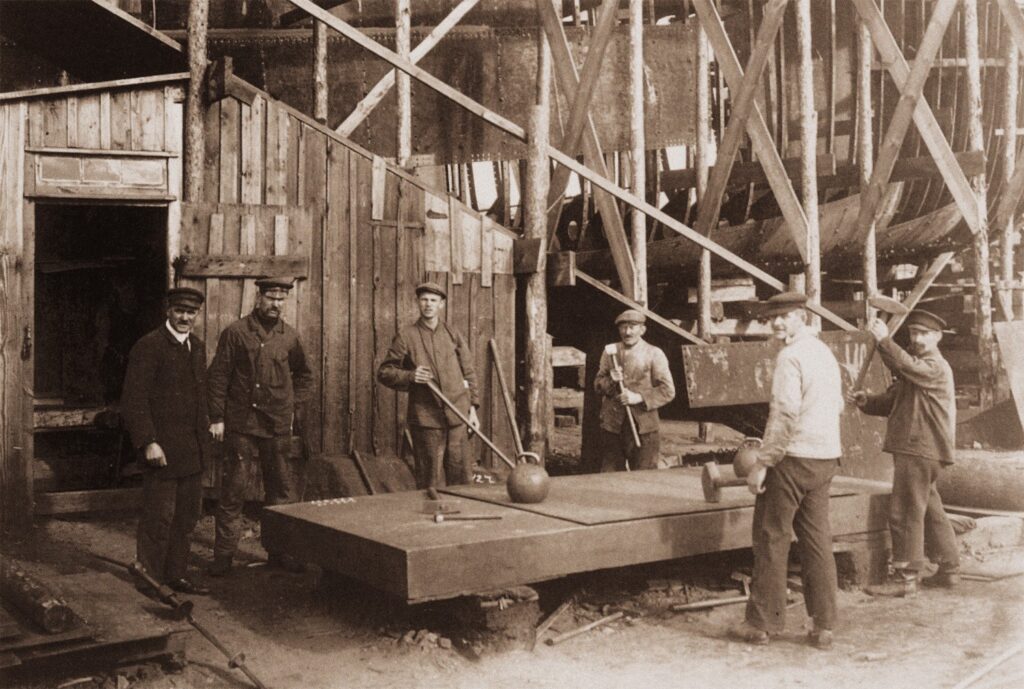
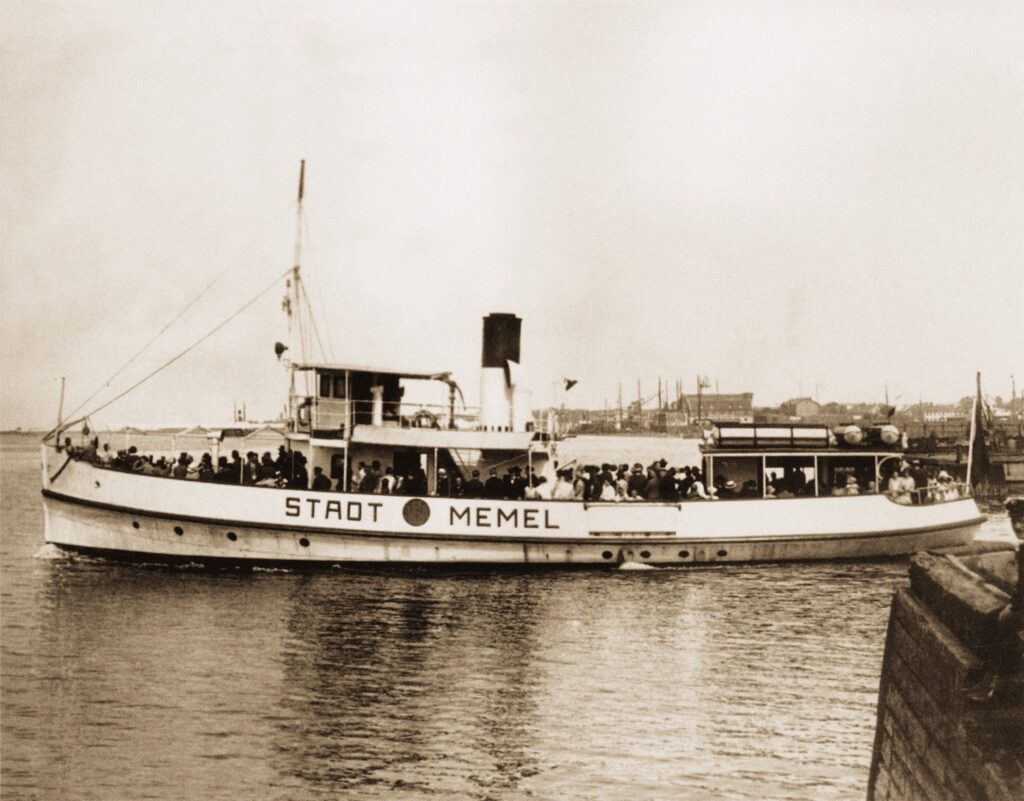
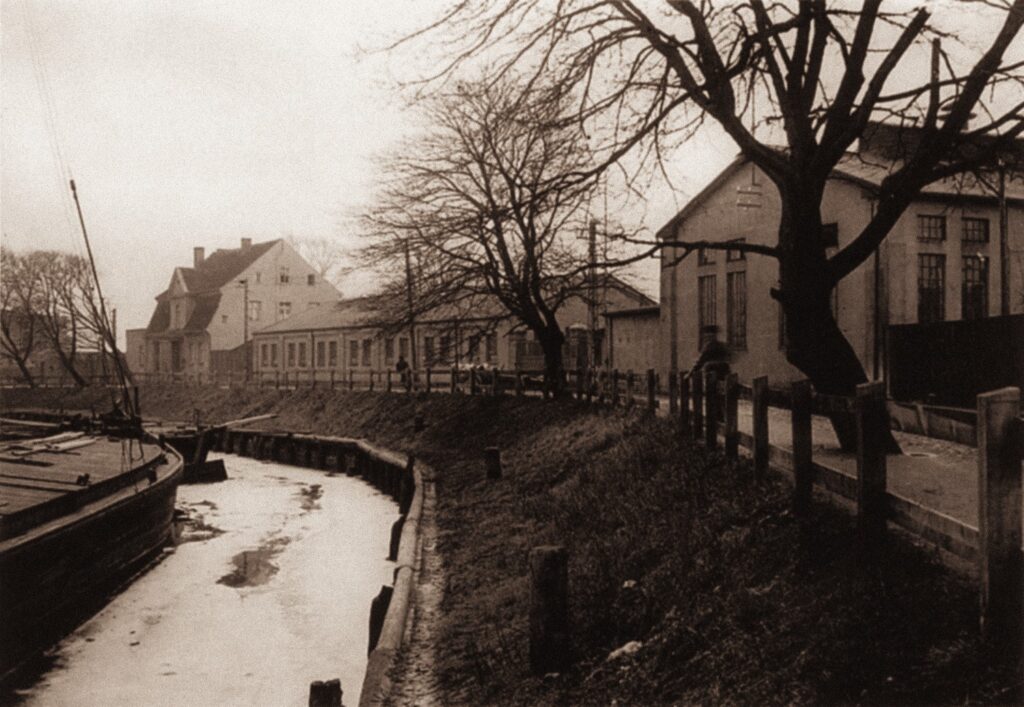
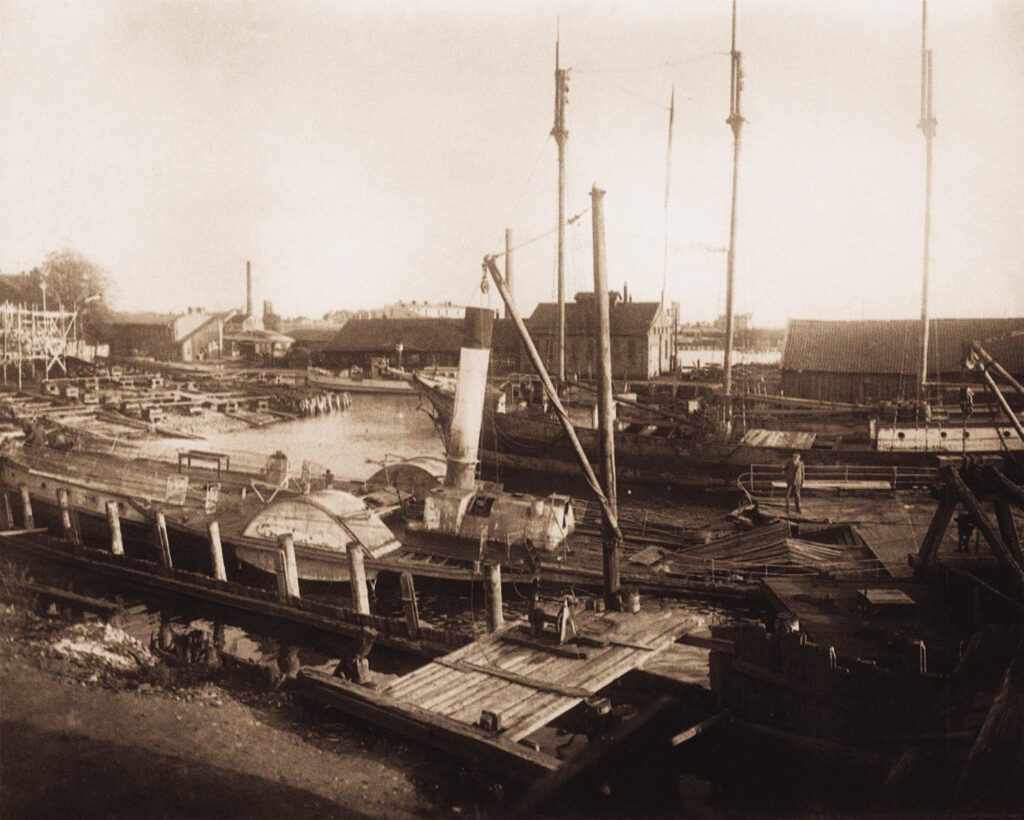
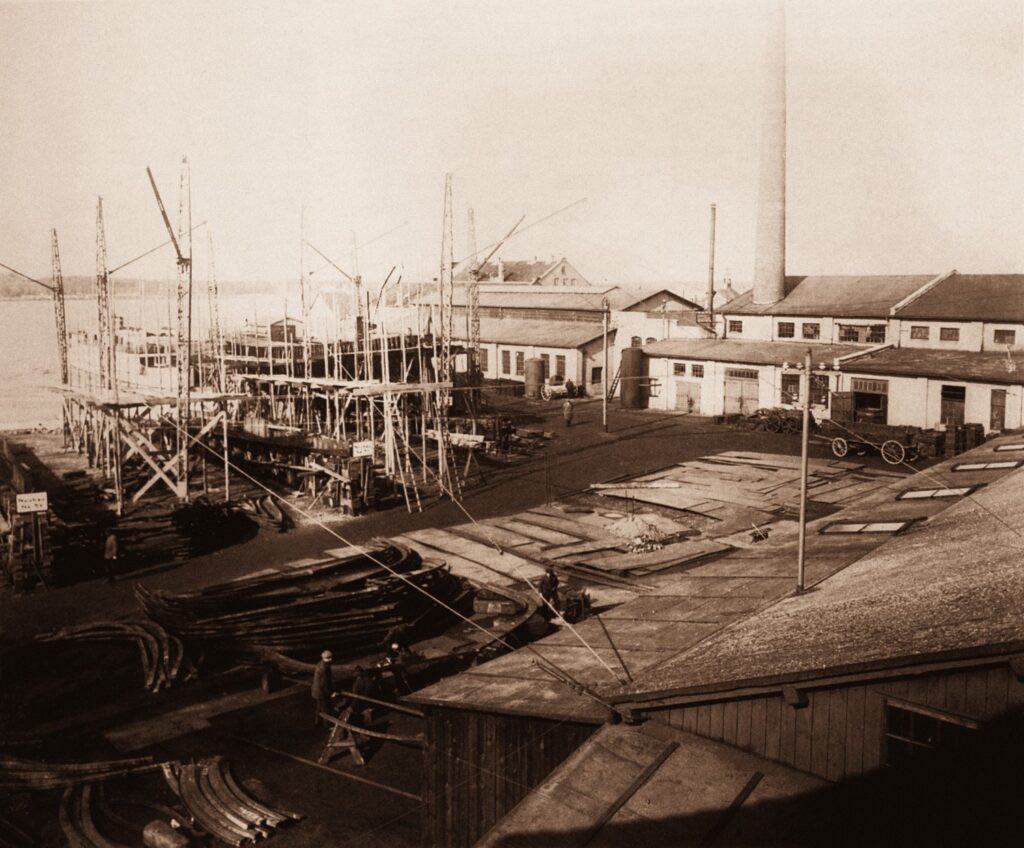
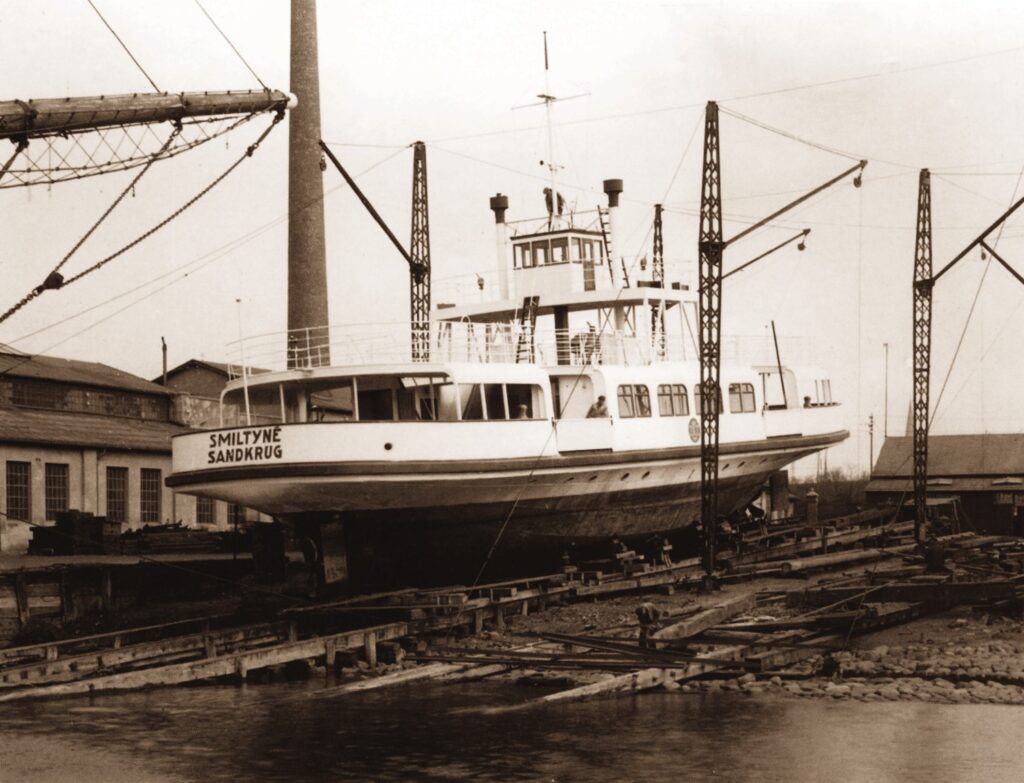
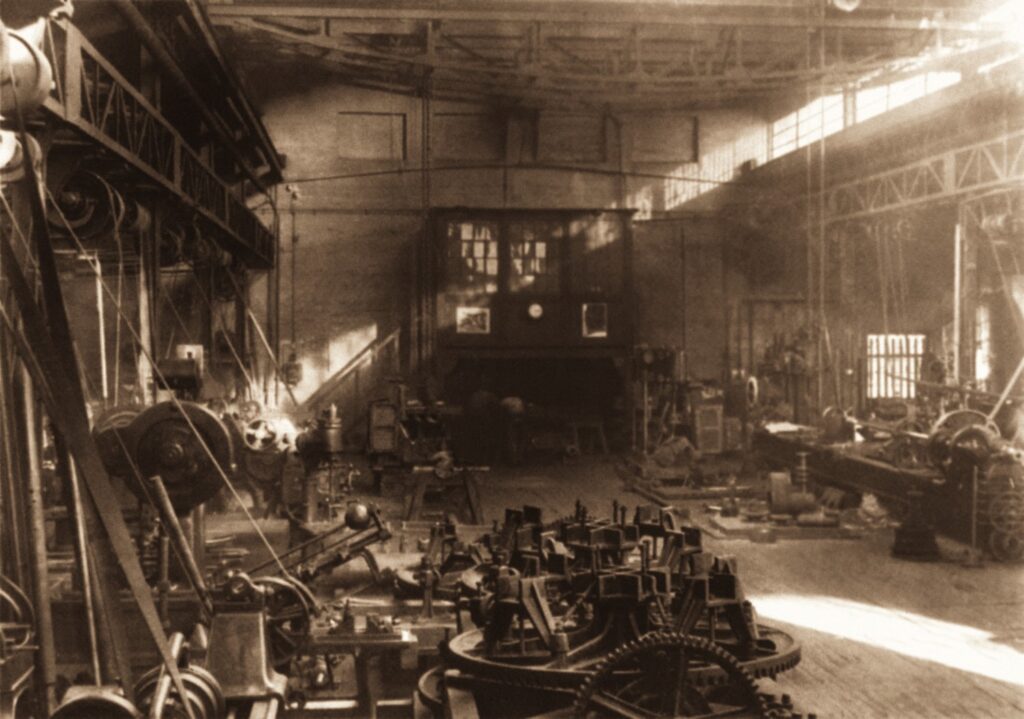
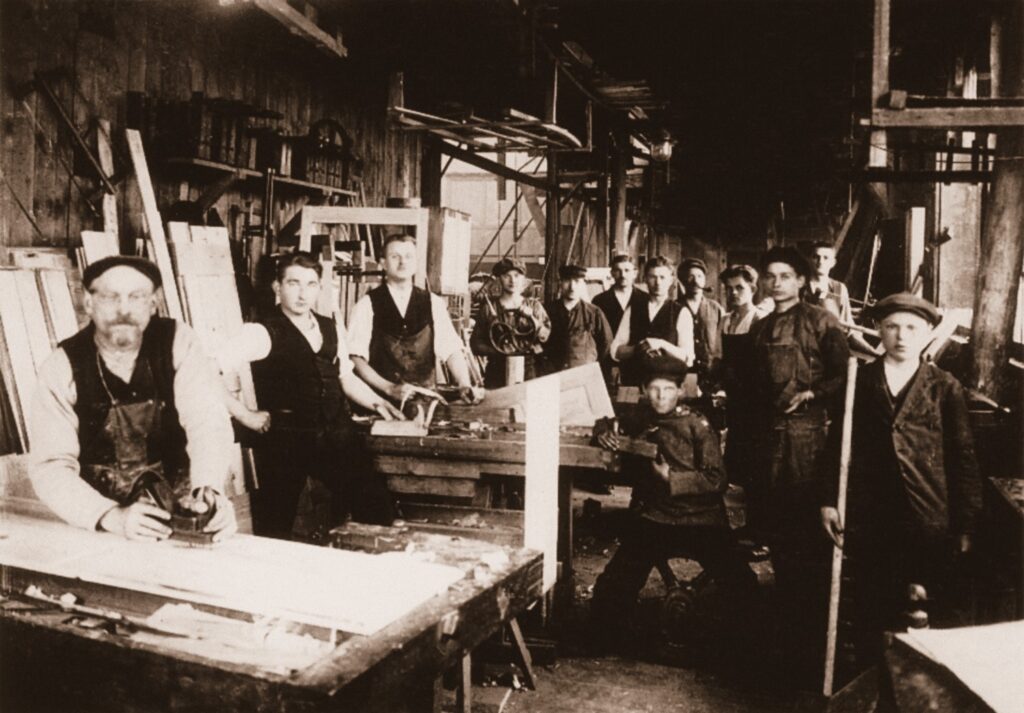
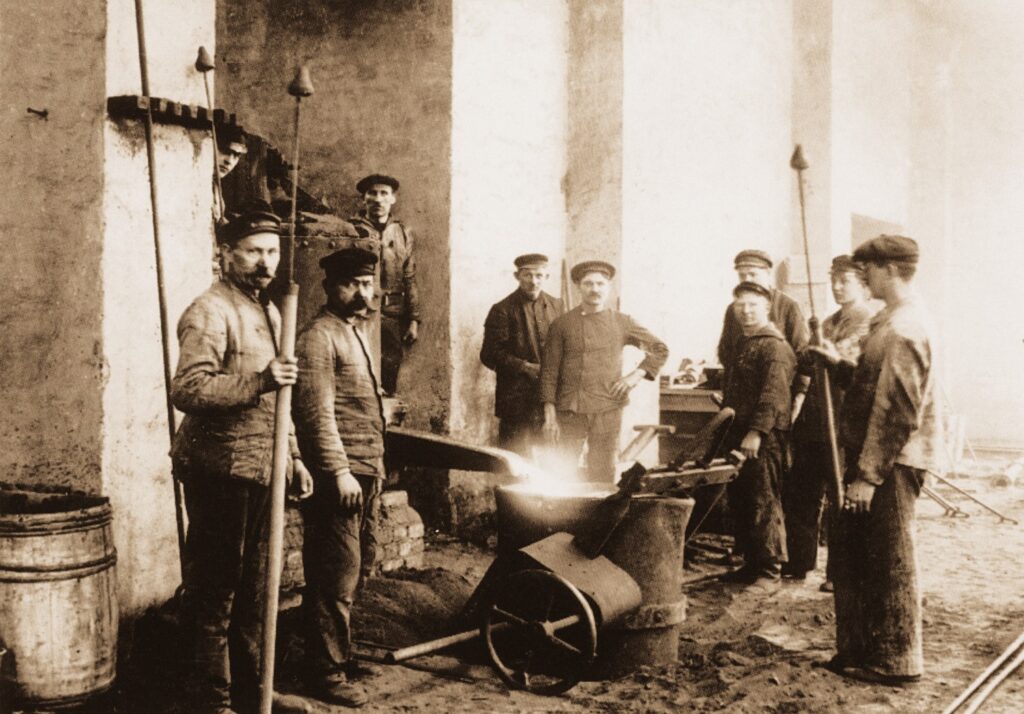
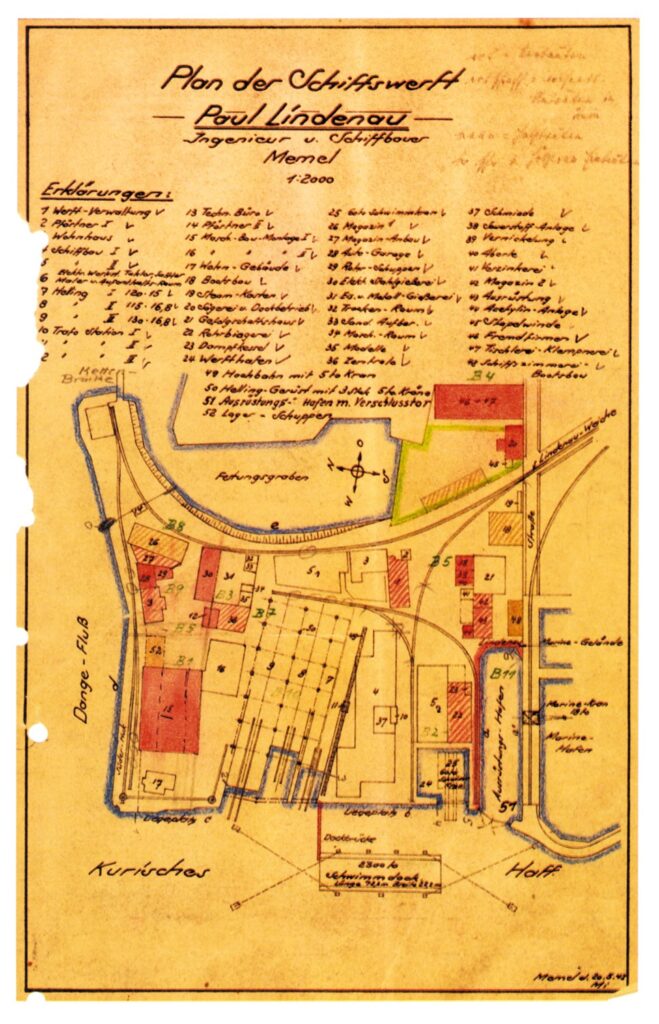
Established in 1875 as a shipbuilders’ cooperative, the company underwent a name change in 1919 when German engineer Paul Lindenau became a shareholder, leading to the renaming of the company as Memel – Lindenau und Cie. Since 1927, the company has been owned by the Lindenau family. The company originally engaged in the construction of metal and wooden ships, operated as a machinery factory, and had its own foundry. In 1922, the company built its first large vessel, the 69-meter steamship Cattaro, commissioned by a Hamburg-based company. Even during the tumultuous period of World War II, Lindenau’s operations continued after the occupation of Klaipėda by Germany in 1939. The shipyard was used for the construction of minesweepers and the repair of German warships. To support these activities, the facility was equipped with state-of-the-art machinery, and during the war, it employed around 1000 workers. As the Eastern Front approached in 1944, the shipyard facilities were relocated to Piluva (now Baltijsk), where they were incorporated into a military maritime weapons and ammunition production facility. After the World War II, in the autumn of 1945, the company relocated and now operates in Kiel (Kiel-Friedrichsdorf). In Klaipėda, the company also resumed its activities after the war, focusing on the repair of fishing vessels. Between 1946 and 1949, the main production workshops were constructed. Subsequently, additional modern production workshops equipped with state-of-the-art metal processing lathes and other machinery were established. With increasing demands and volumes for ship repairs, the company gradually transitioned to larger vessel repairs, such as MFTs (Medium Fishing Trailers), MFTCs (Medium Fishing Trailer Reefers), and others. MFTs became one of the main categories of vessels undergoing repair at the company, leading to the initiation of comprehensive aggregate repairs for these vessels. In 1960-1961, the majority of ship mechanisms, including engines and winch systems, began to undergo aggregate repairs. In 1965, the company was renamed as the Experimental Ship Repair Company. This name was bestowed for the implementation of new and progressive technologies in the repair of ships and their mechanisms. As the company’s manufacturing potential grew, opportunities arose to repair even larger vessels, such as LFTCs (Large Fishing Trailer Reefers), and more. In 1991, the company was re-registered as the State Ship Repair Company, and on 11 July 1995, it became a special-purpose joint-stock company named Klaipėdos Laivų Remontas. On 7 July 1998, by the decision of the Government of the Republic of Lithuania (Resolution No. 842), the company was removed from the list of special-purpose companies. Regaining independence, the company adapted to new market conditions, continued the repair of small and medium-sized vessels, secured international orders, and engaged in cargo operations. The company established a yacht port, servicing yachts arriving from Lithuania and abroad. To this day, the limited liability company Klaipėdos Laivų Remontas occupies a niche in the repair of small and medium-sized vessels at Klaipėda Port. In 2004, the stock of Klaipėda Ship Repair was acquired by Achema company in partnership with other stakeholders. In 2010, the company became a member of the Achema Group.